

Did you know that nearly 80% of regular gym-goers hit a frustrating plateau within their first six months of training? They work hard, stay consistent, but their results suddenly stall. The scale won’t budge, and their strength gains disappear.
This common roadblock often happens because the body adapts to the same routine. To keep making gains, you need to challenge your muscles in new ways. This is where a smart training strategy becomes essential.
A scientifically-backed method called progressive overload provides the solution. It’s the key principle that separates those who see continuous improvements from those who stay stuck. By making small, strategic increases in your training demands, you can trigger ongoing muscle growth and strength development.
This guide will walk you through creating an effective approach tailored to your fitness level. You’ll learn the science behind muscle adaptation, practical techniques to increase intensity, and how to structure your routine for long-term success.
Whether you’re new to strength training or an experienced lifter, understanding this method will transform your results. You’ll break through plateaus and achieve your physique goals more efficiently.
Key Takeaways
- Progressive overload is the fundamental principle for continuous muscle and strength development
- Strategic increases in training intensity prevent adaptation plateaus
- This method works for beginners and experienced athletes alike
- Proper implementation requires understanding muscle adaptation science
- Customizing your approach based on fitness level maximizes results
- Small, consistent changes lead to significant long-term improvements
- Safety and proper technique are essential for sustainable progress
Introduction to Progressive Overload Training
Your body’s remarkable ability to adapt can become your biggest obstacle to continued improvement. When you perform the same exercises with identical intensity week after week, your muscles become efficient at handling that specific stress. This efficiency means the challenge decreases, and so does your progress.
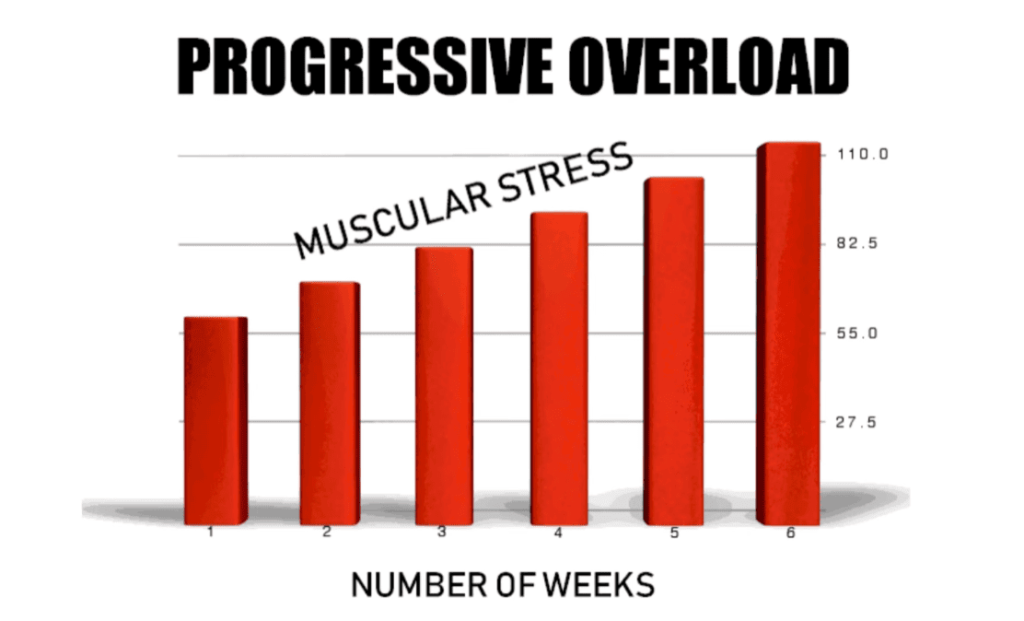
Progressive overload training solves this adaptation problem by systematically increasing demands on your musculoskeletal system. This method encourages your body to build stronger, larger muscle fibers capable of handling greater loads. The principle applies to various exercise forms, from weightlifting to bodyweight routines.
| Training Approach | Short-Term Results | Long-Term Outcomes |
|---|---|---|
| Consistent Same Routine | Initial improvements | Plateau and maintenance |
| Strategic Increases | Steady progress | Continuous growth and strength |
| Random Changes | Inconsistent results | Unpredictable development |
Without implementing progressive overload, you’ll likely maintain your current fitness level rather than achieving new gains. Your muscles need consistent challenges to trigger adaptation and development. This approach ensures your efforts translate into meaningful, lasting improvements.
The beauty of this training method lies in its universal applicability. Whether you’re focusing on strength building or endurance enhancement, gradual increases in intensity drive results. Understanding this concept from the beginning sets the foundation for sustainable fitness success.
Understanding the Principle of Progressive Overload
Muscle growth operates on a simple biological principle: adapt or maintain. When you consistently challenge your body with the same demands, it becomes efficient at handling that specific stress. This efficiency means your progress eventually stalls.
The solution lies in understanding how your muscles respond to increasing challenges. Your body needs consistent signals to continue developing rather than simply maintaining current abilities.
Defining Progressive Overload
Progressive overload represents the gradual increase of stress during exercise training. This method ensures your muscles receive the stimulus needed for ongoing development. The principle applies whether you’re lifting weights or using bodyweight exercises.
During resistance training, you create microscopic tears in muscle fibers. As your body repairs these tears, it rebuilds tissue slightly stronger than before. This adaptation process, called hypertrophy, forms the foundation of muscle growth.
Key Concepts and Benefits
The core concept demands that muscles work harder than their current capacity. Simply repeating identical sessions won’t produce continued results. Your body only invests energy in growth when faced with new challenges.
The benefits extend beyond mere size increases. Systematic application of progressive overload principles enhances muscular endurance and power output. You’ll also experience improved bone density and metabolic rate.
Perhaps most importantly, understanding this as a gradual process prevents common training errors. Rushing intensity increases often leads to injury rather than optimal growth. A patient, structured approach creates sustainable progress for years rather than weeks.

Why Progressive Overload is Essential for Strength Training
The frustration of hitting a wall in your training journey is a common experience for dedicated exercisers. You maintain consistency and effort, yet your results stall. This occurs when your body adapts to familiar demands.
Breaking Through Plateaus
Training plateaus happen when your muscles become efficient at handling current challenges. The same routine that once sparked growth now maintains your current level. Progressive overload provides the solution by systematically increasing demands.
This method ensures your muscles receive new stimuli for continued development. Without these strategic increases, even the most dedicated individuals will eventually stop seeing improvements.
Boosting Muscle Growth and Endurance
Muscle growth requires fibers to be stressed beyond their current capacity. This triggers hypertrophy, the process of building additional tissue. The same principle applies to endurance development.
Gradually increasing training volume enhances your muscles’ ability to perform work over time. This approach builds both size and staying power simultaneously.
| Training Method | Plateau Risk | Growth Potential | Endurance Development |
|---|---|---|---|
| Static Routine | High | Limited | Minimal |
| Progressive Overload | Low | Excellent | Strong |
| Random Changes | Moderate | Unpredictable | Inconsistent |
Implementing progressive overload transforms your fitness results. It moves you from maintenance to continuous improvement in both strength and muscular development.
How to Implement Progressive Overload in Your Routine
Implementing progressive overload requires practical strategies you can apply immediately. The key is making small, consistent changes that challenge your muscles without overwhelming them.

Increasing Weight and Repetitions
Adding more weight is the most straightforward method. Start with a load that allows proper form for your target reps. When you can complete all repetitions comfortably, increase the resistance slightly.
The repetition method involves boosting the number of reps per set. Work within a range like 8-12 repetitions. Begin at the lower end, then gradually increase until you reach the upper limit before adding more weight.
Adjusting Sets and Rest Periods
Adding extra sets to your exercises increases training volume effectively. If you typically do three sets, adding a fourth provides new stimulus for growth.
Shortening rest periods between sets creates metabolic stress. Reducing breaks from 90 to 60 seconds intensifies your workout without changing weight or reps.
| Progression Method | How to Implement | Weekly Increase |
|---|---|---|
| Weight Increase | Add 2.5-5 lbs when reps become easy | 2-5% |
| Repetition Boost | Add 1-2 reps per set weekly | 5-10% |
| Additional Sets | Add one set to existing exercises | 10-15% volume |
Change only one variable at a time to track progress clearly. This systematic approach ensures continuous improvement while minimizing injury risk.
Progressive Overload Workout Plan
PureGym PT Phil Carpenter’s comprehensive system guides you through three distinct training phases. This 12-week approach systematically builds your capabilities from foundation to peak performance.
Foundation Phase: Building a Strong Base
The first four weeks establish proper movement patterns and muscular endurance. You’ll train 3-4 days each week with fundamental exercises.
Perform squats, bench press, bent over rows, leg press, and overhead dumbbell press. Complete 3 sets of 10-12 reps for each movement. Select a weight that challenges you while maintaining perfect form.
Development and Intensification Phases
Weeks 5-8 introduce more intensity with 4 sets of 8-10 reps. New exercises like deadlifts and incline bench press create fresh challenges.
The final phase focuses on maximum strength development. Train 4 days weekly with 5 sets of 6-8 reps. Advanced movements like front squats and Arnold press demand greater concentration and effort.
Throughout all phases, gradually increase your weight as you become stronger. This structured approach ensures continuous adaptation without guesswork.
Methods to Increase Exercise Intensity
Beyond simply adding more plates to the bar, several creative approaches can elevate your training intensity effectively. These methods challenge your muscles in fresh ways when traditional weight increases become difficult.
Volume and Time Under Tension
Manipulating time under tension creates significant metabolic stress without heavier weights. Slow, controlled movements during the lowering phase extend muscle engagement dramatically.
Tempo work specifies timing for each movement phase. A three-second lift followed by a three-second descent increases intensity substantially. This approach works well with various exercises.
Exercise Variations and Technique Tweaks
Strategic exercise modifications target muscles from different angles. Changing your grip width or stance position alters the mechanical challenge effectively.

Progressing from bodyweight movements to weighted versions represents a clear intensity pathway. Equipment changes, like switching from dumbbells to barbells, also boost training demands.
| Intensity Method | Implementation | Primary Benefit |
|---|---|---|
| Time Under Tension | Slow eccentric phases (3-5 seconds) | Increased metabolic stress |
| Tempo Variations | Prescribed lift/lower timing | Enhanced muscle engagement |
| Exercise Progressions | Bodyweight to weighted movements | Fresh movement patterns |
| Technique Adjustments | Grip/stance modifications | Different muscle targeting |
The Science Behind Muscle Growth and Overload
Muscle development isn’t just about lifting weights—it’s about understanding the biological processes that transform effort into results. When you challenge your muscles properly, they respond with remarkable changes at the cellular level.
Understanding Muscle Hypertrophy
Strength training creates microscopic tears in your muscle fibers. This might sound concerning, but it’s actually the essential trigger for growth. Your body interprets these tiny damages as signals to build stronger tissue.
During recovery, satellite cells activate and fuse to damaged fibers. This process adds new material that makes muscles larger and more powerful. The type of training determines the specific adaptation your body makes.
| Hypertrophy Type | Primary Stimulus | Resulting Adaptation | Training Focus |
|---|---|---|---|
| Myofibrillar | Heavy loads | More contractile proteins | Strength development |
| Sarcoplasmic | High volume | Increased fluid and energy | Muscle size enhancement |
Adaptive Responses in Strength Training
Your system’s responses extend beyond muscle growth. Neural adaptations improve how your brain communicates with muscles. Connective tissues strengthen, and bone density increases.
Strategic overload ensures these adaptations continue. Without increasing demands, your body maintains rather than improves. This explains why consistent challenges drive long-term development in strength training.
Tips for Safe and Effective Training
Building strength safely depends on two key practices: monitoring your development and avoiding common pitfalls. Smart training combines measurable progress with techniques that protect your long-term health. This balanced approach ensures continuous improvement without unnecessary risk.
Tracking Your Progress
Keeping detailed records of your workouts provides essential data for making informed decisions. Use a simple notebook or app to log exercises, weights, and repetitions. This creates a clear roadmap showing your development over time.
Consistency in your routine allows for accurate measurement. Stick with the same exercises for 4-6 weeks while gradually increasing intensity. This methodical approach makes it easy to track meaningful progress.
Preventing Injury and Overtraining
Increase intensity slowly—about 10% weekly—to give your body adequate adaptation time. Avoid changing multiple factors simultaneously, as this compounds stress. Listen to your body‘s signals like persistent fatigue or soreness.
Proper form remains crucial for safety and effectiveness. Always warm up for 5-10 minutes before each session. Allow 1-2 rest days between intense training targeting the same muscles. These practices significantly reduce injury risk while supporting recovery.

Incorporating Advanced Techniques in Your Workouts
Elevating your training beyond basic principles opens up new pathways for muscle development. These sophisticated methods provide fresh challenges when standard approaches become less effective.
Drop Sets, Pyramid Sets, and Super Sets
Pyramid sets gradually increase weight while decreasing reps. You might start with 12 repetitions using lighter weights, then progress to heavier loads with fewer reps.
Drop sets work in reverse. Begin with your maximum weight for 6-8 reps, then immediately reduce the load for higher repetitions. This creates extreme metabolic stress.
Super sets combine two different exercises performed back-to-back. Pairing movements like biceps curls with triceps presses increases training density significantly.
| Technique | Rep Range | Weight Progression | Primary Benefit |
|---|---|---|---|
| Pyramid Sets | Decreasing reps | Increasing weight | Strength building |
| Drop Sets | Increasing reps | Decreasing weight | Muscle fatigue |
| Super Sets | Consistent reps | Stable weight | Time efficiency |
Tempo Work and Progressive Variations
Tempo training controls repetition speed deliberately. A 3-second lowering phase followed by a explosive lift increases time under tension dramatically.
Progressive variations systematically advance exercise difficulty. Moving from push-ups to dumbbell bench press represents a clear progressive overload pathway.
These advanced methods boost training intensity effectively. Use them strategically to break through plateaus while maintaining proper technique.
Remember that advanced training requires careful implementation. Apply these progressive overload methods selectively to maximize results without compromising recovery.
Strategies for Sustained Progress and Avoiding Plateaus
Many dedicated lifters overlook a crucial component of long-term success: planned periods of reduced intensity that prevent stagnation. Doing the same routine each week maintains current strength but won’t drive improvement. You must strategically advance challenges to see continuous progress.
Incorporate deload weeks every 4-8 week cycles, reducing volume by 40-50%. This allows your body to recover fully while preserving fitness adaptations. During these days, you might lift lighter weights or take extra rest.
Varying your training stimuli prevents accommodation. Change exercises, rep ranges, or training splits periodically. This way keeps your body responding to fresh challenges.
Track multiple metrics beyond weight lifted. Monitor bar speed, recovery quality, and perceived exertion. This comprehensive approach helps identify when adjustments are needed in your training plan.
Remember that true progressive overload occurs over months, not weeks. Avoid pushing for personal records every session. When plateaus happen, reassess recovery, nutrition, or exercise variations. Fitness improvement isn’t perfectly linear—some workouts feel stronger than others.
The key is ensuring your overall trend shows improvement. Strategic recovery and variation make increasing intensity sustainable long-term. This balanced approach to progressive overload prevents burnout while driving continuous development.
Early Results and Adjusting Your Routine
The initial weeks of any new strength program often bring exciting changes that signal you’re on the right track. You’ll notice your body responding with improved performance and energy levels.
These early gains come from your nervous system learning to recruit muscle fibers more efficiently. This happens even before significant muscle growth occurs.

Listening to Your Body
Pay close attention to how your body feels during each workout. Notice if exercises feel easier or harder than expected. Your energy levels throughout the day also provide important clues.
A practical method involves attempting a few extra reps with your current weight. If you can comfortably complete 15 reps when your target is 12, it’s time to increase the load. This approach helps gauge readiness for progression.
Factors outside the gym significantly impact your training capacity. Inadequate sleep, poor nutrition, and high stress can temporarily reduce your ability to handle increased intensity.
Modifying Your Plan for Continued Gains
Adjusting your routine doesn’t mean abandoning your plan at the first challenge. Instead, make strategic changes based on performance data and recovery indicators.
The amount of rest you need may change as you advance. Beginners might recover in 48 hours, while experienced lifters may need 72-96 hours between intense sessions.
For women, hormonal fluctuations throughout the menstrual cycle affect training capacity. The follicular phase typically supports higher-intensity workouts, while the luteal phase may require reduced volume.
Regularly reassess your approach every 4-6 weeks. Evaluate the number of personal records you’ve set and whether your form remains consistent. This helps maintain progress in your fitness journey.
Conclusion
Your journey toward greater strength and muscle development begins with one simple truth. Progressive overload training isn’t just another fitness trend—it’s the foundation of real, lasting results.
By gradually increasing demands on your body, you create the perfect environment for growth. This method works whether you follow a structured program or create your own approach.
The key lies in patience and consistency. Make small increases over time rather than dramatic jumps. Track your progress and listen to your body’s signals.
Balance your training with adequate rest days and proper recovery. This prevents injury and keeps you moving forward. Remember that progress isn’t always perfectly linear.
Plateaus and setbacks are normal parts of any fitness journey. Working through them intelligently separates temporary gains from permanent transformations.
You now have the knowledge to build impressive strength and achieve your goals. Apply these principles consistently, and your efforts will pay off for years to come.